Six years ago, "seamless" was a claim printed on a box. Today it's a construction, and it's 15% of everything the category sells.
The whole market grew at 7.74% a year over the same stretch. Do that math twice before you reorder.
Perfect Locks puts seamless and invisible builds at 15% of extension sales, up from 0% six years ago. Same source, same period: "genius weft" has been the fastest-growing US search term for an extension method since 2021.
Fifteen points of share. Six years. Inside a category compounding at 7.74%.
That isn't a trend line. That's a reallocation. Somebody took fifteen points off the methods that were already there, and the methods that were already there are weft at 33% of category sales and tape-in at 32%.
Look at what the 15% is made of and it gets stranger. In our order book it isn't a wave of new buyers. It's the same salons, the same shade ranges, moving grams out of classic tape and into the injected base. Same client sitting in the same chair, buying a different object.
Most wholesalers we talk to are still buying the 2020 mix. They're paying 2026 prices for it and wondering where the margin went.
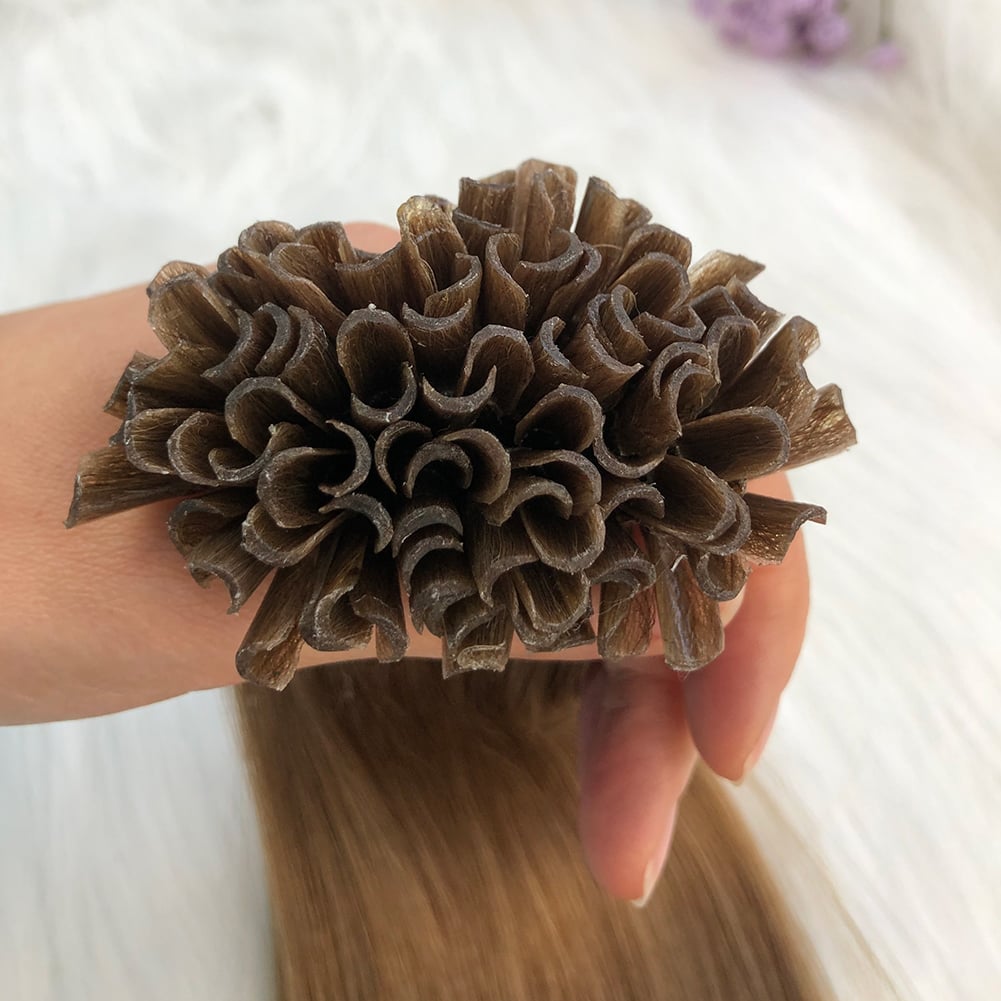
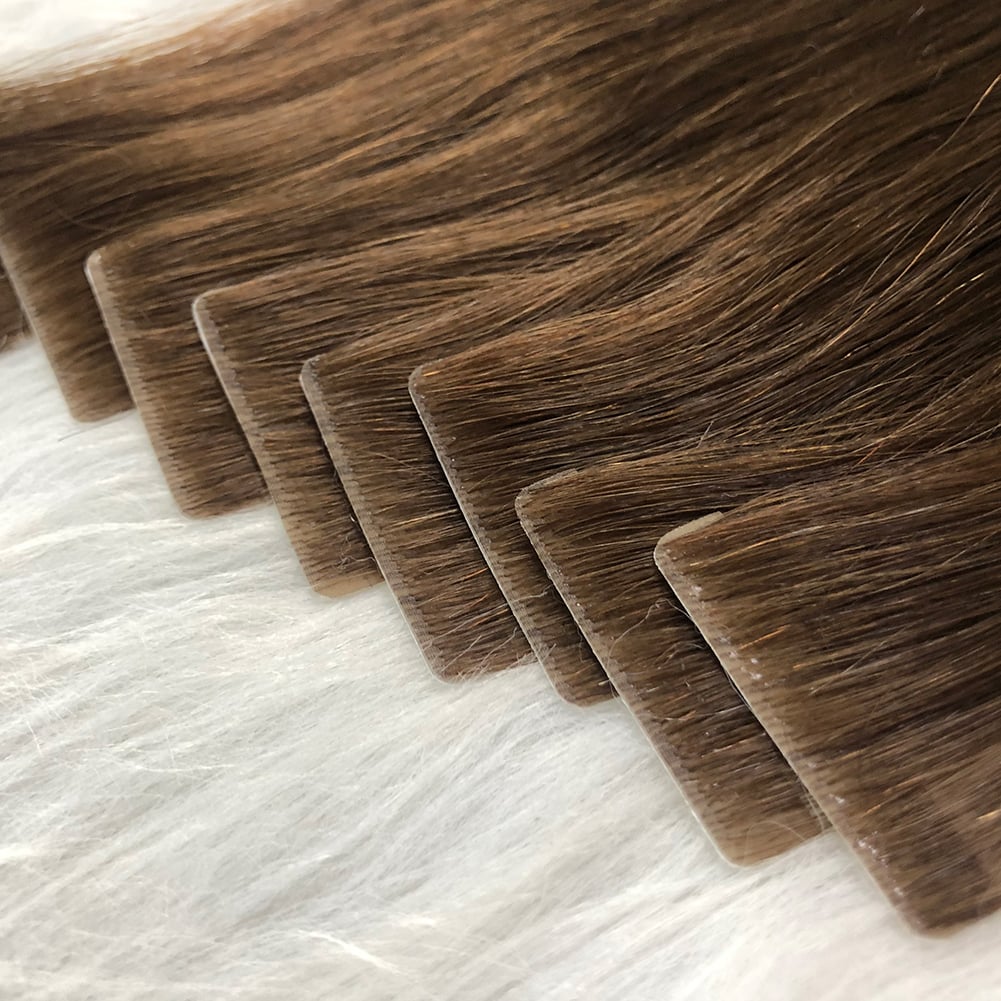
Classic tape-in is a weft sewn onto a fabric strip, and the tape goes on the strip. Seamless tape is hair injected into a skin-like flexible base, and the tape sits on the base. Same install motion. Different object.
Product copy blurs that line constantly, and mostly on purpose. We've bought samples labeled seamless, in good packaging, from suppliers who should have known better, that turned out to be the same polyurethane with a matte finish and a new name on the front. Ask a supplier one question: is the hair sewn to a strip, or injected into a base. If they can't answer it in one sentence, you've learned what you needed to learn.
Here's what the construction buys you, and no spec sheet will show it. Take a tenth of a millimeter off the base and a client with fine, low-density hair who'd been told extensions weren't for her can wear them. That isn't a feature. That's a customer who couldn't buy before.
On the floor it changes everything downstream. The injected base has to set before it can be cut, so it doesn't move through the plant at the speed of a classic strip. Color behaves differently too. An injected base reads lighter under light than a fabric strip does, so an ombre that looked right on the swatch ring can look washed three inches from the ends. We catch that at the ring, in daylight, before anything goes in a bag. Catching it at the client means a return, a free redo, and one salon that stops calling.
At Salon International in London this October, Zen Luxury Extensions ran a live install challenge with its ADAPTI system and put a full set on at ten minutes. The feedback that came back off the floor was almost entirely about time. Not color, not price. The clock.
That matches what we see on the factory floor, and it explains why seamless is taking share faster than anyone modelled. Install time is the only input a salon can't buy more of. Every minute a set takes is a minute the chair earns nothing, and a stylist who now fits two sets into the slot where she used to fit one hasn't improved her service. She's changed her unit economics.
There's a second lever, and it's less obvious.
Ask any installer what actually eats the time and the answer isn't the tape. It's the blending. Point-cutting four rows so a tape-in disappears into a bob is the part that bills at nothing, and it's the part clients complain about when the set feels stiff at the root.
A thinner base sits flatter, which means fewer rows to hide the seam. Fewer rows means less point-cutting, less product, and less of the rework that happens when a client comes back at week three with a corner lifting because the base was too rigid to move with her own hair. In our experience that lifting is the most common single reason a tape client doesn't rebook.
None of this shows up in a market report. It shows up in minutes per chair per week, and that's the number a salon owner actually decides on.
The obvious move is to relabel the existing line, take the fifteen points of demand, and let the client find out at week three.
We won't do that, and it costs us quotes. There's a version of seamless being sold right now that is a classic strip in a new carton, and the only way to compete with its price is to join it. We'd rather lose the order.
The injected base is also just slower. It doesn't cure on the schedule a fabric strip does, the sheets come off the line narrower, and a 300g run through the new construction takes more hands than the same 300g through classic. If a seamless quote comes in under a classic quote in the same length and density, something in that quote is not what you think it is.
Three hundred grams of seamless and three hundred grams of classic, same shade, same length, on the same two clients, with a stopwatch.
That costs less than a booth at any trade show this year, and it will settle an argument that a decade of product copy hasn't settled. You'll know inside a month whether your clients feel the difference. Your installers will know inside a week.
 EN

 Hot News